The best environmentalists don’t bathe at all
A little Dove Original Deep Moisturizing with one-quarter cleansing cream and my hostas are in heaven
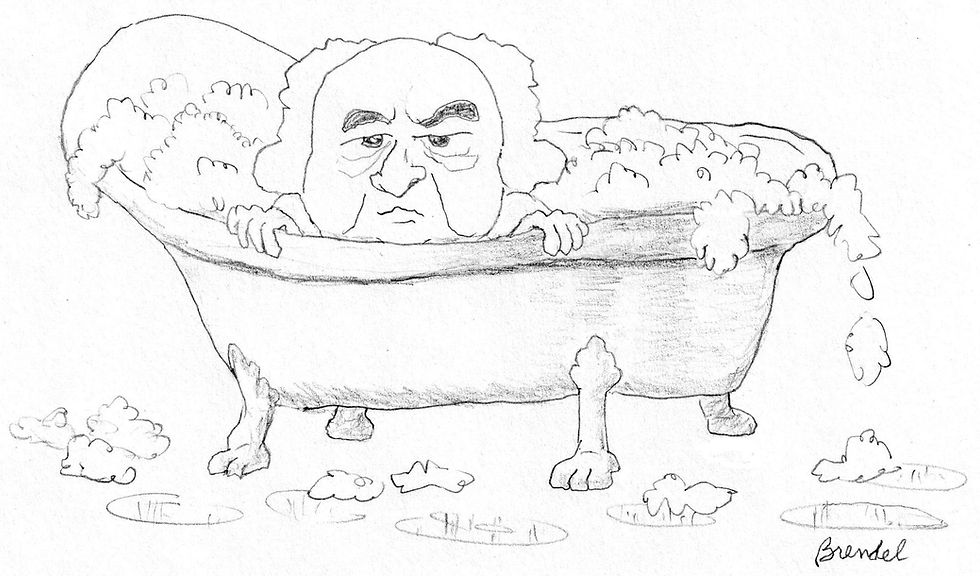
There was rain this week, a little, anyway, but don’t let that fool you. We’re in a drought, a real drought, not one of those wimpy droughts that can be scared away by a little rain, no, this is a major drought, a let-your-garden-thirst-to-death drought. This is a serious drought, and we need to get serious about it.
So let’s start with your bathroom habits. Which do you take, a bath or a shower? A bath? Stop that.
The average American bath consumes 30 to 36 gallons of water. The typical shower only uses 17 — assuming you shower for 8 minutes and 12 seconds like the average person. Above-average people are environmentally conscious and get out of there in 7 minutes and 46 seconds or maybe even 43.
This of course assumes you have a decent showerhead, which delivers only 2.1 gallons a minute. A 1992 federal government mandate sets the maximum flow at 2.5. Old-fashioned showerheads, manufactured before ’92, can gush up to 12 gallons per minute.
By Ipswich standards, 1992 is like yesterday. We have bathrooms that haven’t been updated since 1692. Hey, your antique showerhead could be causing the entire drought. Be a hero. Get a new showerhead and end the drought and let people water their gardens again.
If you already have a modern showerhead and you’re already taking showers, you may feel you’re making enough of a contribution to the anti-drought effort. No, you’re not. Not if you’re showering alone. A true environmentalist will put a bucket in there.
While you’re waiting for the water to warm up, how much goes down the drain? That water can go into your bucket. Then, while you’re washing up, even more water can be captured.
By the time you’ve completed your 8.2 minutes of washing, shampooing, and rinsing, you’ll have a bucket full of “gray water.” No more sneaking out in the middle of the night to douse your dahlias. You can lug your bucket out in broad daylight and do the deed openly, proudly, legally. Try not to snicker at your neighbor’s wilted wisteria, however. And definitely do not shout to them over the fence, “Still showering alone, eh?”
Understandably, some may worry about soapy water killing plants. Fear not. The soap and shampoo are so diluted, your nasturtiums won’t know the difference. Plus, soil filters impurities, so by the time your gray water reaches the roots, it’s delish.
You can be an even better environmentalist by getting fanatic about gray-watering. Keep a Tupperware container in your kitchen sink, maybe something even smaller in your bathroom sink. A little gross toothpaste-spit won’t harm your hydrangeas.
Okay, I concede, if you take baths instead of showers, you can load up even more bucketsful of gray water. Yes, I know, you could water all of Bialek Park. If you live in a townhouse, with no big outdoor garden to nurture, you could even sell your surplus gray water to hapless neighbors in single-family homes who can’t keep their azaleas alive.
But consider the negatives:
Bath Downside #1: It’s illogical. You’ve taken twice as much water out of the system, but you’re not twice as clean as your honorable neighbor who takes responsible showers.
Bath Downside #2: It’s immoral. All that guilt!
Bath Downside #3: It’s icky. A bath is fundamentally gross. The gunk comes off your body and then you steep in it. Who ever thought this was a good idea?
The ancient Greeks and Romans routed their famous aqueducts into overhead tanks rigged to let water stream down on bathers. Before long, the military figured out they could scrub whole brigades this way, faster and cheaper. Pretty soon showers were all the rage in prisons and asylums.
If it’s good enough for the criminally insane, it’s good enough for me.
![As [redacted] as apple pie](https://static.wixstatic.com/media/d313ba_e55b318aa95440f49df535b83744c9d2~mv2.jpg/v1/fill/w_980,h_813,al_c,q_85,usm_0.66_1.00_0.01,enc_avif,quality_auto/d313ba_e55b318aa95440f49df535b83744c9d2~mv2.jpg)


Comments